About
OceanNexus is a four-year European research project investigating how climate-driven tipping points and extreme events in the ocean can propagate through the interconnected systems of the ocean, marine ecosystems and society.
The project combines climate models, ecosystem models and societal models to investigate changes over the short, medium and long term. Researchers will, among other things, investigate potential changes in the AMOC, a weakening of the North Atlantic Subpolar Gyre, and persistent marine heatwaves.
OceanNexus will develop methods to identify early warning signals of critical changes in the ocean and investigate how consequences can propagate from the physical ocean to marine ecosystems and onwards to social and economic systems.
Case studies
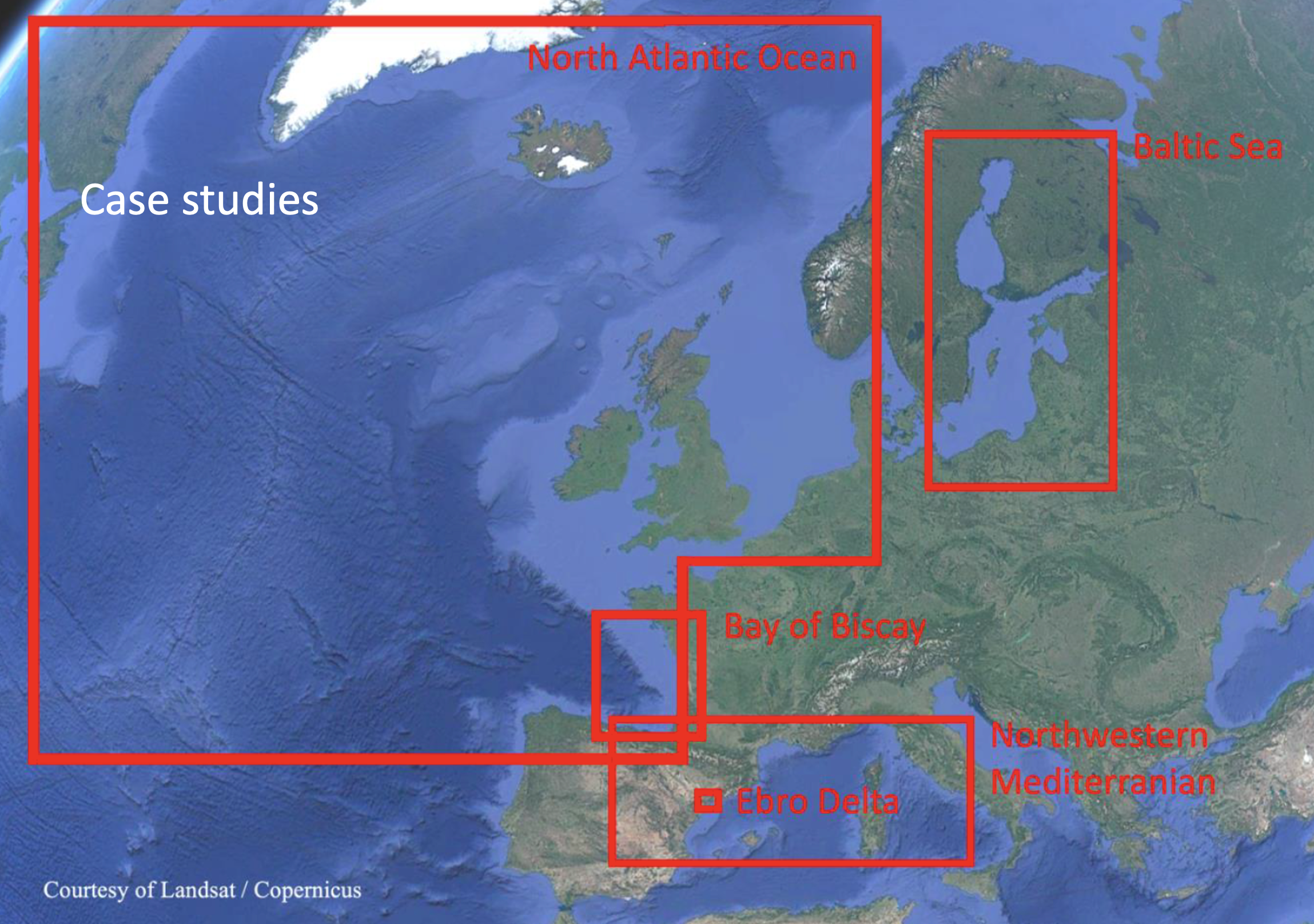
OceanNexus investigates how changes in the ocean can affect marine ecosystems and society across five case study regions: the North Atlantic Ocean, Baltic Sea, Bay of Biscay, Northwestern Mediterranean and Ebro Delta.
Together, the case studies cover very different marine environments – from large-scale ocean circulation in the North Atlantic to regional seas and vulnerable coastal ecosystems. This allows researchers to investigate how different types of climate-driven change can propagate through the ocean–ecosystem–society nexus.
North Atlantic Ocean
The North Atlantic is central to the global climate system and a key region for studying changes in large-scale ocean circulation, including the Atlantic Meridional Overturning Circulation (AMOC) and the North Atlantic Subpolar Gyre.
Baltic Sea
The Baltic Sea provides a regional case study of a semi-enclosed sea already experiencing rapid environmental change. OceanNexus will investigate how physical changes interact with marine ecosystems and human activities in the region.
Bay of Biscay
The Bay of Biscay connects the open North Atlantic with densely populated European coastlines and important marine ecosystems. The case study will help explore how changes and extreme events in the ocean can affect ecosystems and the societies that depend on them.
Northwestern Mediterranean
The Northwestern Mediterranean is particularly relevant for studying marine heatwaves and their impacts. OceanNexus will investigate how persistent extreme temperatures can affect marine ecosystems and how these impacts may propagate further into society.
Ebro Delta
The Ebro Delta brings the research to the coastal scale, where changes in the ocean interact directly with ecosystems and human activities. It provides an opportunity to investigate the links between physical change, ecological impacts and societal consequences in a vulnerable coastal environment.
How we work
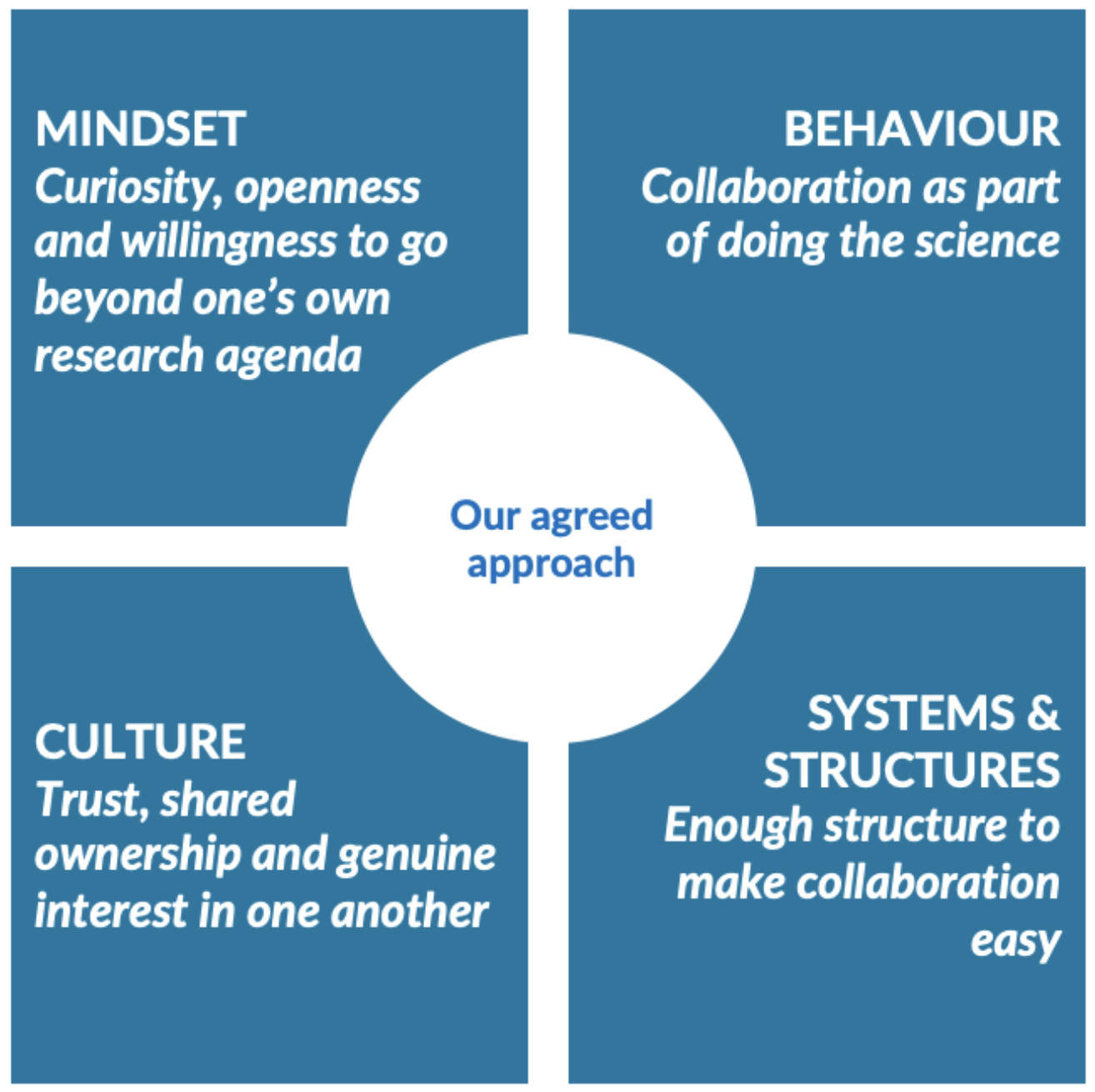
OceanNexus brings together researchers across disciplines, institutions and countries. To succeed as one project, we need more than scientific connections – we need a shared approach to collaboration.
At the start of OceanNexus, we identified four closely connected dimensions: mindset, culture, behaviour, and systems & structures. Together, they reflect our ambition to stay curious across disciplines, build trust and shared ownership, make collaboration part of doing the science, and create structures that make it easy to connect and work across the project.
Participants
- University of Copenhagen – UCPH – Coordinator (DK)
- Utrecht University – UU (NL)
- University of Leicester – ULei (UK)
- Aarhus University – AU (DK)
- Technical University of Denmark – DTU (DK)
- Agencia Estatal Consejo Superior de Investigaciones Científicas – CSIC (ES)
- Fundación AZTI – AZTI Foundation – AZTI (ES)
- Plymouth Marine Laboratory – PML (UK)
- National Oceanography Centre – NOC (UK)
- Consiglio Nazionale delle Ricerche – CNR (IT)
- Ecopath International Initiative – EII (ES)